
Hosted on Acast. See acast.com/privacy for more information.
[00:00:00] The battle for the mind of North America will be fought in the video arena. The television screen is the retina of the mind's eye. Therefore, the television screen is part of the physical structure of the brain.
[00:00:29] Well, welcome back to episode 43 of The Outer Reels. I am Sam and forever with me is Jason. We're not 43. We have to be 43. Well, moon 44 was 44 dude. God damn! I do that every... Right, because we're ahead. What is it? What is this? This is 45 then. This is 45. I don't know how bad... I do that so often. How hard is it?
[00:00:58] Okay, so 45 it is, but still, of course, as I said, as always, Jason is here for episode 40. Hello, you had me doubting myself for a second. So... I'm so ass backwards with these numbers because, you guys, we do record a few weeks in advance from what's coming out, so... Especially now because Sam's in the middle of a move. So we were trying to get ahead of the game. Yeah. That didn't quite work out.
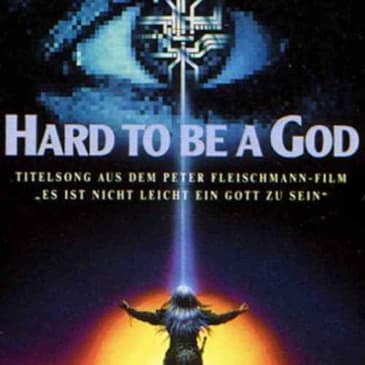
[00:01:23] Yeah, I had my very last night in San Francisco, so I am free of that now indefinitely. There you go. Well, Jason, how do I start this out? But tonight we're watching Hard To Be A God from 1989. The 89 version, because there was a remake in what, 2015 or something? Yes. 2016 or 2015. Some people say 2013.
[00:01:49] It seems to be all over the map, but it's like a black and white one, which seems to come up any time you look for this movie. It always ends up being the one that comes up. But this is the 1989 version. And I'm going to turn it over to you, Jason. I really wanted to like this. Once I kind of realized what was going on and had an understanding of it, I mean, this is basically Star Trek Insurrection.
[00:02:20] But it's... I really wanted to like it, but it should have just been a single 45 minute episode of Star Trek because even Star Trek Insurrection wasn't that good. Wow. But yeah, it's just the gist of it is, you know, basically they're, you know, future humans are watching past humans, society. I really liked it. Did you? Yeah. And I surprised myself. I had a range of emotions throughout this.
[00:02:49] When I chose it, I was like, this is not going to be a good movie. You were dreading this. I know. And I was just like, I don't know, you know? And then when I chose it, I was like, I'm not sure. When I started watching it, I was like, okay. And then like halfway through it, I was like, I really like this movie. I really like what's going on here. And to be clear, it is a lower budget movie. And you know, it's not without its problems.
[00:03:19] But the idea of it is just awesome. And I exactly, it makes me want to read the novel. It's based on it. Yes. I also thought I might want to watch the remake. But then I read that was like three hours. And I was just like, no, because this movie is too long as it is. So I'm like, no. Yeah. This wasn't a slug for me at two hours though.
[00:03:44] It was, I kind of watched it twice too, because I watched it and I was thinking about it a lot. And then I was like, hmm, maybe I missed a few things. So I watched, you know, probably an hour and 20 minutes of it as a whole all over again, just to try and make sure. And it turns out that what I thought I was missing was still missing. At least I, I always like to say, yeah, I like to say that this movie is, I'm not smart enough for this movie.
[00:04:14] I think it's the way that I put it. Cause I think it's a very intelligent film and I just don't think I can fully wrap my head around it that way. I don't know if that's the case. I think it is. There's, there's probably a lot of symbolism and stuff in this, that, that we're both missing. Um, and it could just be, that's not translating. Well, if we want, I mean, we should point out, I think we both watched this, a dubbed version on YouTube, um, which was not a great copy for some reason.
[00:04:41] Every now and then it would cut to some, I don't know, Chinese release or something with giant Mandarin subtitles on it. No, that was that, that is when they go back to the octagon in the, and they're observing it. But that version of the movie was probably released without a textless version. So that's the only copy of it. But because when we cut back to that, we see the titles, it's always happening in the observation.
[00:05:10] But it wasn't always with the observation though. It was just every now and then. And I swear I saw it in the medieval stuff too, at one point. I think this was someone piecing it together. And, um, and pulling from a couple, from like two different sources whenever he felt something was missing. And I'm assuming it's a he, cause usually only guys would put this kind of effort into something like this. It says it's a laser disc. Just like our guy who has. So. Yes. Just like the guy who had the full version of the Langoliers. Who's gone? No, you're, you're totally right. Uh, it did have those.
[00:05:40] And I, now that I remember the title sequence was also had a different language on it too. So yeah, I've, I remember when it would cut back and I was thinking, oh yeah, this is cutting back to the observers in the octagon looking, but, and seeing the text. But now that I'm realizing what was happening, but it is a hard to find movie for that case. This is the only version we could get. I love that you're calling their spaceship, the octagon.
[00:06:08] It's just, cause it is an, is it is, it's a hexadecimal, hexagonal or octagonal shape for sure. Well, they refer to it in the movie as the octagon. Yeah. Cause it becomes part of the religion. So. All right. Then I'm not as thrilled with you now. Yeah. So there's a real lot to unpack about this movie and yes, but it's, it really is a good movie and it's a fun concept.
[00:06:35] I think, you know, your pitch of it is certainly better than anything I could come up with. Cause that's very much to the point. I would have to say that it's about a future society who develops the ability to travel far into space and they come across a planet much like earth, but it's whether it's stuck or it's evolving or whatever.
[00:06:57] It's right in the middle of medieval times at this point and earth in its current state, our earth is so far advanced. The world is, you know, there's, it's, there's no, there's no hunger. There's no suffering. I don't even think there's any jobs. It's this, you know, utopia and they send down these observers to see what's going on and they kind of get absorbed in the idea.
[00:07:26] And it opens the big question of like, you know, do you engage or do you interact? You know, if you're going down there to observe and you see something horrible and you don't stop it, you know, are you better off to not stop it or do you have to do it moralistically or, you know, there's a lot of questions there.
[00:07:46] Yeah. I mean, this, this is, um, I mean, when, well, it's funny cause it's based on a book from 64, um, which makes me wonder if, um, uh, Roddenberry read it because, because of this idea of the, uh, prime directive in Star Trek is essentially what these guys are doing. Interesting.
[00:08:06] They're there to observe. They're not allowed to interfere and they find it like the guy that's down there finds it really hard not to because he sees horrible things going on because medieval times on earth were sucked. Like it's just brutal. Right. So he's seeing these things and he's trying not to interfere, but it's really hard. Um, hence the title is hard to be a God. Um, and he, and he struggles with it and it, and this is why I really wanted to like it.
[00:08:36] I just felt like it just took way too long to tell a story is my problem. You know, there's, there's, there's, it's like a whole subplot with the medieval stuff that is him and a girl that he likes who looks an awful lot like, um, um, Rebecca DeMoyne say risky business is what I'm thinking. And it's just that his girlfriend, the redheaded one, um, who he promises to take with him at some point. If you know who I'm talking about in the movie.
[00:09:05] Um, I don't think I've seen that movie since I was a kid. No, no. But I mean like, um, our main guy who's down there with the wild wig. Oh, um, Don Ramada. Don Ramada. Thank you. And he's got this, this girl who lives with them basically in his house. I guess she's his, his servant or something. Yes. But they kind of fall in love and she totally, she's got the exactly like the same hair and stuff. Just totally reminded me of that. I don't think of. Yeah.
[00:09:35] Yeah. Um, so this is a, uh, this is a co-production of West Germany, France and the Soviet Union. And this is like a, a rarest of the rare where it's a cold war collaboration in cinema. So as you said, it is based on a book and the little bit of stuff I looked into, maybe want to read this book actually, because the book, as you said, was 1964.
[00:10:02] And it's written by these two Soviet brothers, which I'd certainly not heard of a creative and Boris stood gradsky. I'm screwing up how that's pronounced. But of course, people who love the book hate, like hate this movie so much. So that makes me want to really read the book. So it looks like they published in English in 73. So it must be around. Yeah. And then it got a full proper release in like 2013, not only recently, which was a true German translation.
[00:10:30] Because the one in 73 was a translation from a Russian print. So it's only in recent times got a real thing. But the consensus is that the tone of the movie is way, way off. And the book is a lot more philosophically, you know, has more of a philosophical approach than what this is. Because this movie kind of plays like Highlander a little bit, to be honest. Okay. I mean, you can tell with the music, the ballads and everything, like it's got like this, it's trying to,
[00:11:01] be that movie, you know? Okay. I can see that. Yeah, sure. Yeah. The story is very different, obviously. Yeah. So I found an interview with the brothers much later in life. And they were asked what they thought of this movie. And they were being very polite about it. And the response was simple. And it was translated, but it just says, it looks like an adventure film. It should feel like a tragedy.
[00:11:27] Which sums up their take on what they wrote versus what ended up on screen. Which I think is probably accurate to also why the people who read the book love the book and hate the movie. Could be. Yeah. And it sounds like the 2013 movie is, is much more of a tragedy. Like I'm seeing. Part of why I was almost going to take a look at that one was I'm hearing people say like it's a masterpiece and stuff, but it also makes no sense whatsoever. Yeah. It's really hard to follow.
[00:11:53] Another reason why I kind of decided to skip it, I think I'll just seek out the, I'll seek out the, probably the audio book, to be honest, because I see that exists. Oh, there you go. That's a good, that's a good happy medium. Yeah. I looked, I looked at the 2013 one, it's all black and white. And I stepped through it and it looks like way more of an art project than this movie is. This movie still feels like a front to back movie, but people love the 2013 one.
[00:12:20] But I think that's a little further out of my wheelhouse than I'd typically go. But so this book from 64 is part of a universe called the noon universe. And also the translation is the wanderer's universe, which all take place. This is all written by the two brothers and they all take place in this future setting. And it's a narration of humanity reaching noon by the 22nd century.
[00:12:45] And that's kind of their idea is that humanity has reached high noon in the 22nd century and everything comes of civilization or humanity. Right. Okay. So he's likely like the entire, so if, if the entire duration of time of man, the 22nd century is like. The middle. I get halfway through the day or whatever. Okay. Yeah.
[00:13:07] And so these 10 books, they run from 1961 to 1985 and all of them contain characters and worlds and companies and people and corporations that intertwine all throughout. So it's kind of cool. This is, you know, it's like a big long form universe that they created that we'd never heard about. Is roadside picnic part of that too? Cause I realized they both wrote that as well. So. Oh, cause you mentioned. Yeah. Right.
[00:13:33] We've talked about it before and I think I, I think I attributed to Stanislaw Lem at the time, which is wrong. It's, it's these two guys. And roadside picnic is fantastic. So. Oh, that's right. Yeah. Cause it was, it was only a recent episode where we're talking about it. You said it was Lem. No. Yeah. This is 1972. So this is right. And this is the noon of their noon series actually, cause it's right in the middle of it. So there you go. There you go. Yeah.
[00:13:59] Well, you would know more about the book stuff than I would, but the book from what I looked into about it, the book is a lot more heavy handed on the social commentary about human progression throughout centuries. And, you know, always being cruel and bloody and brutal, like medieval times when they're witnessing.
[00:14:19] But, you know, you can have like war and, you know, religion battling against scientific disciplines, but the book goes more into the eyes of the observer, which is what this movie takes place doing where it's somebody who's our protagonist is sent to this planet to just watch and observe and report back.
[00:14:41] And it sweats the details in the book more of the intricacies of like watching him from an evolutionary perspective, the observer himself, uh, seeing him as somebody who first can't interact, but then pushed to a point becomes more primal and kind of has to stand back up and fight. And so we get a little bit of that in the movie. Like there's a scene where they, they kill a hog and they cook the leg and he's like eating it and he's like gorging himself.
[00:15:10] And the people up in the hexagon or in the spaceship witnessing him are like, Oh my God, it's disgusting. And, and he's like loving it. Right. Right. Because he's probably never had anything like that in his life. And so there's these primal things that get drawn out. Right. Yeah. And there's definitely some of that because he ends up, he ends up fighting at a certain point too. And, um, yeah, sorry. It's just, yeah, exactly.
[00:15:33] And it's just, that's basically what the book pushes forth is that, you know, it's, it's an interesting, interesting discussion of like, there's all these primal people and he's so far removed from that primal world because he's so far from the future where nobody has to do anything. And yet his primal urge to stand up and fight, which he normally wouldn't be is only a by-product of current times, which is kind of interesting.
[00:16:00] So like the, the future world that he's grown up in turns him medieval because he's never had a taste of it or never had a curiosity for it until he's being interjected to it. So it, it seems really, really interesting. Again, I, it's, it's probably too smart for me to bother, but. Yeah.
[00:16:19] Well, there's some note in that I picked up at some point and I don't know if I read it somewhere or if I picked it up through the dialogue, but for the most part, humanity is kind of emotionless at this stage too. Yeah. Like they've, they've just kind of suppressed all their emotions. So he ends up kind of, this all sort of comes out of him at certain points. Like, like at one point he's, he's ready to, to essentially rape his, his servant woman. Right.
[00:16:45] Who, you know, cause he just kind of tears her clothes off and then he realized he stops himself and realizes what he's doing, but he's giving into these primal urges throughout and he's having a hard time kind of dealing with some of the stuff. And then there's that woman on the ship who I, I guess you're supposed to think is either his mate or lover or. Just like a crush on him or something. Yeah. Yeah. Something. Cause she's crying at a certain point as she sees him because all of them on the ship are able to see through his eyes.
[00:17:13] Like, I think the idea is he's got an artificial eye and there's a camera in it or something. And, um, cause he turns it off at one point and then they switch over to this, like this infrared thing. And I'm just so they can watch it. Yeah. So they can watch him make love to this woman later. And that's just, yeah. It's all being broad. It's, it's all being broadcast back to the ship.
[00:17:33] And, you know, I mean, demolition man is probably a great current example in a microcosm of it, you know, of, of how clean and, you know, uptight society has gotten, you know, where they can't high five each other anymore. And like, you know, you can't swear, you know, you can't like do anything salt. You can't have salt and all that sort of stuff. So none of these guys would have any idea what three shells are for. Yeah, exactly. Do you know how those work? I have no idea.
[00:18:01] Well, what you do is, I'm glad you asked that, Jason, because you take the first two and you use like a pair of tongs, right? And then you get out the most of it. And then the third one, you do a final scrape with. It would never work. That's the, that's the infographic that I saw related to it. I didn't need that. Yeah.
[00:18:21] So I think that everybody who are these observers or everybody who are working with the observer are watching all of this go down and it's shock and awe for them because they've discovered this planet. And we learn it was about 16 years ago. They discovered this planet's existed. And we learned through the movie, they've been monitoring it for 16 years now. Yeah.
[00:18:45] And our main man, Ramada, the observer, he's sent down there because their last observer has gone missing. They can't find him or they can't contact him. And he ends up, he's been put in prison for some reason. They can't reach him. So they send down this new observer, like just go get him out of prison, come back, and then we'll keep letting things going. And, you know, of course he doesn't, it's not that simple.
[00:19:10] I guess when it starts out, you know, our main guy, Ramada, is there on the ground and then he gets a visit from a helicopter. Yes. I should say, all the medieval people refer to it as a dragon because of course they would. It's flying and it makes this noise. But we should say this is a 1970s era black helicopter with some whites randomly put on white spray paint.
[00:19:38] Like it's, they don't even try to change how it looks. It's so weird. Yeah. I, I, I didn't read what the, the, it just looks like loose graffiti. I don't know if they got it, but I'm glad you mentioned the dragon reference because I really dug that because in the ancient astronaut theory, all previous spaceships that were visitation were mechanical machines. And then in history they've been referred to as dragons.
[00:20:07] And the reason that is because they had fire breathing dragons and what it was, it's just people weren't seeing dragons. They were seeing spaceships with thrusters and that's why. Sure. So the, so, so the legend of dragons and the myth of dragons didn't come from them finding like whale bones and dinosaur bones and things. No, it's entirely.
[00:20:29] No, because I mean, if you, if you subscribe to the ancient astronaut theory, it is all based off dragons being vessels that humans came in. Cause it's always like gods flew on dragons and gods arrived and they flaming breath and it's all about the rockets of the ships that would arrive. Okay. I'm telling you, man, I guess I got to watch ancient aliens. I've never actually seen it.
[00:20:57] So my God, they're gearing up for season 20. You are missing out. I'm okay. Um, but there is a point to this and the movie references it. And then when the townsfolk talk of the dragon or whatever, or this God who showed up, it was a helicopter. And so they lean on that a little bit, which is really great. I thought at least as far as, you know. Yeah.
[00:21:22] I just would have thought from a, from a production design standpoint, they might've done something to make the helicopter look less like a helicopter. Yeah. No, it's funny. They, they have all this technology and then they have this old, like Russian, you know, backwards helicopter. I don't, it's not, it's not something really nice, like a hind D. I don't even know what model chopper it is, but it's, it's a, it's not a very impressive helicopter from back in the day.
[00:21:48] But the, uh, the point is, is that this helicopter comes visits and he's the, uh, he's the boss of the observer. And he gives the observer, like he, he sort of loads him. It's kind of like the back to the future to moment. He's all your gear. This is who you are. And he prints out a thing and he's like, this is your name. This is your history. And he gives him these bags of coins. He's like, here's a bunch of gold. Here's some clothes.
[00:22:10] He gives him all these like, um, time accurate, you know, clothing and gear and says, you know, go on out there and make them, you know, believe you or whatever. And the observer here mentions that he was only 12 or something when this planet was discovered. And the boss mentioned something about like, it's essentially the planet is essentially a distorted, like view of our own past or something. I think they're trying to say like, you know, we used to be this brutal as well. Right.
[00:22:38] But we want to see how it, how it takes place. He gets this mission. You don't really hear what the mission is, but we know he's going to find the other observer, but that's about it. But that's the first 20 minutes of the movie. And I was like, I was kind of hooked. I was like, this is awesome. Like he's got this little dirt hut out in the middle of nowhere, but then the other side of the hut is this like futuristic gateway where he talks to everybody on the octagon.
[00:23:03] And I keep saying the octagon, but the octagon is this octagonal spaceship flying in space above the planet. And it's a bright light, but that's where everybody aboard is helping and working with the observer. Yeah. Yeah. And that's, that's the funny thing because they're supposed to be completely just unobserved observers as well. Right. Like they're not supposed to be, they're trying to hide from these guys. But at the same time, you know, Don Reba, is it Reba or no Ramada? Sorry, Don Ramada. Cause there's a Don Reba as well. Yes.
[00:23:32] Which much to my annoyance and trying to keep these guys straight. Don Ramada discovers that one of the guys down there talks about this. I can't remember what he's, I know it's a light. I don't remember exactly what he said that comes out of the moon. And that, that's of course the ship. So, so a bunch of them have actually spotted it and seen it already as this new star in the sky. And it's just like, you got, you got, cause when you see this ship, it's like these huge lights all over it and stuff.
[00:23:58] And I'm thinking, guys, you probably have matte black paint in the future. So maybe, maybe you could do something that kind of disguises the fact that you're this spaceship. But, but maybe that's the whole point, right? Is that, you know, these guys haven't seen anything like it. So what are they going to do? They don't, again, ancient astronauts, they don't know what a spaceship is. So they're just like, it's going to be an octagonal bird.
[00:24:23] But, but you know, for this future society, that's all about, you know, observing and staying out of things is they don't do a great job of it. No, it's a pretty rikidik setup they've got to be clear. I do like it when they call back to earth though. And I want to mention it now because I will totally forget when we get to it. But when we get to Werner Herzog, who is in this movie and I was not ready for his dubbed voice at all, knowing, knowing full well what Werner Herzog sounds like. Especially since you've seen him in movies and stuff.
[00:24:54] And I actually have a, he did this documentary called Cave of Forgotten Dreams, which I absolutely love. It's the reason why I still have a 3D TV. It's, it was a documentary he shot of prehistoric cave paintings in France. So basically, I think it was in the early 2000s. Oh, I saw that. I did see that. It was incredible. They discovered these, these paintings in this cave that had been sealed for tens of thousands of years.
[00:25:21] Like, so they built a grid and stuff and they allowed him to go in with, he went in with 3D cameras because you can get, get a much better feel for the look of, of the paintings and stuff because they're three dimensional because they're painted on cave walls and stuff. And it's just like, yeah. So he, you know, you know, talks over the whole thing. So I'm, I'm intimately familiar with Werner Herzog's voice. And then to have what sounds like a radio announcer coming out of his mouth.
[00:25:49] But, but I also want to say is the room he's in, remember that office because he's in this office that is very futuristic looking for, I guess is what they considered futuristic in, in Germany in 1973. But I want you to remember because the next, my next two picks are going to be a world on a wire, which is a TV mini series of two movie episodes, which while we'll break it over too.
[00:26:15] But that office is, it's like they've used the same set. It's just, the office design in, in, at the start of world on a wire is so, so similar. It's amazing. And when was world on a wire? What year? I want to say it's about the same, but. This is 87. Oh, this is 89. Oh, it's 89. Right. So no, it was before then. This world on a wire is 73. Yeah. So they probably just reuse a bunch of it in this.
[00:26:45] That's great. But it is kind of funny. It's just like, and I don't mean it's exactly the same, but it is so similar. It's, it's just a similar style. It was just, it totally blew my mind seeing that. Yeah, I read a very small, I like to read reviews and stuff. And I read some reviews on Letterboxd about this movie. And I think the one that I found was, it was great. And somebody just wrote the, the whole review for this movie was just when I thought I finally
[00:27:12] found something that nobody had ever seen. Warner Herzog's already been here. It was perfect. Yeah. It's great. And that dude's everywhere. And, uh, yeah. But, um, you know, so like I said, this is 20 minutes in there. There's a, you know, there's a lot of fluff in this movie, but there's some little moments
[00:27:39] where these are is running around town and there's a musician who has like a pan flute and he's about to get killed. There's a lot of people get killed in this. And the observer grabs him and brings him into a room and hides him from the guards. And then the guards come out and he throws a handful of gold coins and he's like, get out of here. And they all scramble for the coins and run away. But the, the musician, the pan flute guy, he's just like a peasant. Right. And he's just like, why, why would you spare me? You know, like that.
[00:28:07] And the observer says in a hundred years when their King is dust, they will still be singing your songs. And I was like, Oh, this is cool. Like, you know, musician's going to be dead as well, but like the observer is trying to preserve things and, and move forward with creation and stuff. And there's, there's quite a few moments like that in the movie, but I thought that was a neat little bit. That becomes a bit of a theme, right? Cause he's, he's trying to, he's trying to push them forward as a society and he's just trying to nudge and steer them away.
[00:28:37] But then you've got a power play going on between one of the King's aides or, um, not, or yeah, not an aide maybe, but, uh, um, advisor, maybe is the word I'm looking for. And, but he's also kind of a religious kook and, um, and the King, and he basically holds a coup and that's, that's where, and I'm getting again, like three quarters of the way through
[00:29:01] the movie now, but basically not a lot happens for 45, 50 minutes to an hour of this movie. Yeah. In the middle. There's, there's some really cool, like other, like one time the King gets brought one of the coins that the observer threw. Yeah. And comments that they're like brand new or whatever. Yeah. And it's cool. Like easily the human hand could not make just one of these with such accuracy and perfection. He's like, let alone many. And then he looks at it again and he's like, it's devil's work. Where is he from? You know?
[00:29:30] So there's all these little things that keep popping up and it's more about, like you said, there, you know, the King isn't looking for advancements, you know, they're burning books and literature and they're stopping all this sort of stuff from happening. And then, you know, I think there's a moment where, well, yeah. And then this kind of leads into, we meet Hawk who he's invented a new machine that everybody in the town's talking about and it's a printing press. Right.
[00:29:55] And this is, this is the moment where I got a little bit more information about the, the larger scale of the movie because he's talking to Hawk and he's like, oh, look, I can strike many copies of this and he's running it. And the observer's like, oh shit, like this is happening. Like the observer's not saying it to the, to Hawk, but he's like looking at it being like, yes, they are progressing. This is happening. They're, they're creating technology. And Hawk says, uh, he reads off.
[00:30:24] Um, he says I can strike repeated copies. And so the thoughts of philosophers can be wild, widely read. And he reads off part of this book that he's printing at the moment. 16 years ago, he said, the philosopher found a transparent curved stones, which enhanced his vision. And he could look back at the gods and the observers like paying attention to him.
[00:30:50] And if you remember 16 years ago is when we've discovered this planet 16 years ago. Right. Right. And the observer picks up the book and on the very cover, there's this, this engraving of an octagon, which is the shape of their UFO. Right. And then, or their spaceship or whatever. Yeah. And what's cool about it is that then we realize that cause he says that then he found these transparent curved stones is what he talks about.
[00:31:20] But later the observer discovers a telescope that's laying in the ground and a whole town has died because somebody invented this telescope. Right. And this is very important because this is also a huge part of ancient astronaut theory because you know, well, like, you know, the gloss in Libya that was found. There's like, I do not Sam. You need to tell me. There's like 30 million year old gloss that's found in, that was found in Libya.
[00:31:47] And the only way for that to be created is for something to a superheated it. So it's a, an atomic bomb or rocket thrusters, right? And you're only two options. And. Okay. I think there's more options than that, but okay. That's it. Okay. Okay. But that's the only thing that you get molten gloss to that temperature from. And isn't there a whole bunch under India somewhere as well, or maybe I'm conflating the two. I heard something about India as well. I don't know about that one. Yeah. Okay.
[00:32:15] Maybe, maybe, maybe I thought, maybe I thought what I heard was India and is actually Libya. Yeah. It just all makes sense because it aligns perfectly with the Ark of the Covenant being not supposedly everybody's like, oh my God, you know, it's haunted or it's cursed. And, you know, everybody's skin falls off. But you know that it's actually a nuclear reactor and it was just radiation burns of why people's skin was falling off. Okay. It doesn't explain the ghost coming out of it in Raiders, but okay.
[00:32:45] Yeah. But that's Raiders. I'm talking, this is way beyond, but the whole thing about this movie is that these people created a telescope because the rockets landed on earth, melted the glass and melted it into transparent spherical glass that they could turn into a telescope and look back at the gods with. So it's, it's so in line with ancient astronauts again, which I think is great because this was
[00:33:11] written in 64 and Charities of the Gods didn't come out until 69. So this is, it's great. Okay. It couldn't, couldn't be that, you know, Charities of the Gods was inspired by this. Oh, maybe. Well, there's a lot more theories there. I mean, Von Däniken has many more theories, but it's entirely possible that this is something in there. But either way, I, uh, I digress heavily, but this is my favorite kind of science fiction.
[00:33:41] I'll tell you that much. No. And I admit, I love all this stuff. I just don't believe it like you do. Right. So, um, I, I love a good conspiracy theory. I love a lot of this sort of alternate history kind of ideas. I just, I love it from a narrative standpoint. I just don't buy it as reality. It's just more fun than the reality, Jason. Oh, totally. And I get, I get why. But some of us can't, you know, have to be in the real world. Not me. No, not you.
[00:34:11] I, I have children and a grandchild. I, I have to be. You, on the other hand, nope. You can enjoy, uh, you know, you'll die alone. But I mean, other than that. Wow. Wow. Wow. Ah, I got to get the dagger out every now and then. Um, there's also, uh, so through all this, I think what happens is that the observer finds the other observer he was supposed to find, you know, the original guy. He's imprisoned. Yeah.
[00:34:41] And he's kind of given up with his, he's only been in prison for a couple of days, but he's kind of given up with wanting to go back. Like, he's like, we can't change him. We're not going to do anything. You know, you can't mess with this. He's like, he's prepared to die there because he's like a real scientist. He's almost just like, I need to die here and I need to stay here. Otherwise we could change things. And the other observers like, no dude, it's my job to come get you. We got to get you out of here. And like, we got to get moving.
[00:35:11] So it also brings up, you know, um, like almost like time travel paradoxes essentially, but even though it's not time travel, we're just, we've just found this other planet, but they're just trying to not disrupt it. And the guy, the original observers really treating it like being a scientist and not disturbing anything. And the new observer who's come in slowly gets drawn into it a little more where he ends up contributing a lot more to it.
[00:35:39] And I think they end up killing the observer, the original observer. Yes. And our hero Ramada, the observer, he watches it and he tells them, he's like, you're getting a good picture of this. He's like, this is how terrible these people are. Like every observer you send is going to die like this as well. And they all just sort of quietly sit up in this hexagonal UFO, just, you know, observing like they're not, you know, they're not stunned by it. They're nothing. No.
[00:36:09] And like I said, at one point they call back to the base and that's for, you know, Werner Herzog basically just says, just, just keep watching. Yeah. Yeah. So they're just, they're so, the future people or the future us are so sterile at this point, you know, nothing phases them, but they don't, you know, it's pointed out, but there's, there's nothing in the world anymore. They don't do anything. They don't, you know, so it's sort of keeps this dynamic back and forth. And there's like three colonies. There's the greys, which is the medieval town.
[00:36:39] There's the peasants that live in the town or in the outskirts. And then there's the monks that are these guys in these red cloaks. Yeah. And there's warrior monks or something too. So, yeah. And there's like a war and they're advancing on the medieval town, but I'm not sure where they originally came from or what it is. But, um, the, I think this is where the observer gets his girlfriend and he's having sex and the
[00:37:06] people on the octagon are worried about like, Hey, he's having too many primal interactions. Like we, we might lose him here. And then he's like drinking, he's eating red meat. And there, you know, there's all this stuff's going on. And it sort of reminds me of the trailer from escape from LA where if you ever saw the trailer and you didn't know it was the trailer in the theater. And it was just like, it was like a lobby card and it'd be like, welcome to the theater. Remember there's no talking, you know?
[00:37:34] And then it's like no freedom speech. And then it's like no red meat. And then it starts going on these things. And I'm like, what do you remember? And then it dips to black and it shows the USPF right there. And then snake gets brought in. And I was like, Oh, this is awesome. Like, cause I didn't even know it was coming out. You know, it was back in the good old days before the internet. But all we had was Starlog. Yes. I do remember Starlog. Starlog and Fangoria, man. Fangoria was my one, but yeah. Yeah. It was all about Starlog and I had a ton of them.
[00:38:04] Some of those are getting collectible now too. Of course. Like everything. They're all gone. I don't, I wish I had them. I have, I have a, I had a Starlog that had an advertisement for Revenge of the Jedi. Oh, wow. That's early. And I was like, oh man. Cause I remember then it came out and it was called Return of the Jedi. I'm like, wait, what? Early, early printing of that. Uh, you know, the King ends up getting killed, assassinated by poison. It's, it's not really worth a mention, you know, it's just part of medieval times, but kind of.
[00:38:33] There's a, there's a Prince that, um, Ramada had takes the liking to as well and kind of tries to guard. Yes. All this stuff's going down. Um, who I thought was a girl at first, but it's just, it's just a boy with slightly longer hair, I guess. But yeah. And he says like some, some like, you know, wholesome stuff to him where, you know, he says, I'll protect you. And the kid says, protect me long enough where I I'm old enough where I can cut off their heads myself or something. And he's like, no, you don't want to do that. And he's like, yeah. Have conversation.
[00:39:01] Like, like he's already just trying to like stop this just barbaricness and say, you know, you want to open conversation and stuff. There's some wholesome stuff in there. There is. Except this kid also was just kind of continues down the path. And maybe he's not as bad as that dude from Game of Thrones, but, um, never saw it. Oh, well, there's a, there's a boy King in that and he's a, he's horrendous. So yeah. Yeah. And I, I think we sort of get to amongst taking over.
[00:39:31] Oh yeah. And then, you know, it's the last like half an hour of the movie is where things sort of really pick up and it gets interesting. And the observer breaks out, uh, Buddha, who's the doctor who's been in prison for a long time. And he brings him on horseback out of the town and they have this sort of, they have this like battle to get out and it's kind of cool. And then they finally get out and then they just spend time. And you know, the doctor is, is wary of, of Ramada and he's, he's like, you know, are you a God? Like, what are you?
[00:39:59] Cause he's seen him, you know, deflect swords and not be injured and all these sorts of things. And Ramada doesn't really answer fully, but he just sort of says, you know, starts asking him questions and it's a fun conversation. And he says, you know, what if you ran Arcanar, which is the town? I thought it was the planet name, but I believe it's just the city there. I thought it was the country or whatever, like the, the area or whatever. There was like that civilization was called that. Right. Okay. Yeah. Yeah. Yeah.
[00:40:30] And he just asked, he's like, well, you know, what do you think is an educated man of the atrocities in Arcanar? If you had the opportunity to improve things, what would you change? And the doctor says the world is an entity. How can I change an entity? There are terrible things in Arcanar, but what's the point of a tree bemoaning that it can't walk, even though that would enable it to escape a woodman's ax, which is a really good line, you know? And I was like, this is, this is great.
[00:41:00] And he, he's just sort of saying like, you know, it's, it's going to happen. Like, you know, why, what can I do about this? And the observer sort of doubles down on the conversation. He said, you know, if you had God's power, what would you change? And the doctor says, you know, give us shelter, give us food. This is what you're talking about earlier, you know, clothing and make the needs that divides men disappear. And the observer says, well then, you know, the strong is just going to take away from the weak eventually.
[00:41:29] And they will be poor just as before. Like, so what, you know, it may equal things out for a minimal amount of time. And then the doctor says like, I would make the almighty see that men have no desire to to have more than he had given them. And the observer said, well, and it, it, it gets cool. Cause he starts to be speaking from his experience at this point.
[00:41:52] And he says, you know, if all needs are met without effort, then we become lazy and we become dull and lose any kind of appetite for living. And then Buddha said, you know, well, why don't we put our hearts into the love of creation and knowledge and let these be become the gold that our lives are directed. And the observer says, yes, that means God should replace the men in Arcana with a new being.
[00:42:22] However, that experiment has already been tried, but we were almost destroyed attempting it far away from here. So this is just this awesome little window into some other planet they discovered at some point and it just became a massive problem or it's their own planet. We don't know. Yeah. Yeah. Um, I don't know. I just thought it was great. Yeah. I would have liked to know more about the religion cause I think it was kind of interesting and
[00:42:50] stuff, but they don't go there. We, we just, we more focus on the fact that medieval times were awful. Yeah. You know, and you know, anyone who studies history knows that. So, you know, it's like all those movies and stuff. The one thing they don't get is I've, I've seen it commented on a few times. It's like, there's not shit everywhere. Like, like there was then because of horses and livestock and it, there's just, it was just everywhere. Yeah. It was just like San Francisco today.
[00:43:23] A little bit worse. Just a little bit. So I think they, they go back to the observer's cave and his big helicopter is there and the doctor's kind of in awe of it. And he's like, talks about the dragon and everything else. And the observer sees a video feed of the monks are now arriving in Arkenau. Like this big battle is going to happen and these monks are going to show up and they're going to slaughter everyone. Don, Don, uh, Rima, Riba, whatever his name is.
[00:43:48] Um, he's basically called in his posse, um, you know, to, to do his bidding essentially. Yeah. And the observer is just like, screw it. And he just gets in the helicopter and he's like, I'm just going to go in there and show him what's up like, and save this village. And of course the octagon are really upset about this. Cause it's like, there's one thing to observe and interact, but now you're bringing like
[00:44:16] a quote unquote flying dragon into the mix for this townsfolk. Like this is going to ruin history in all sorts of weird ways. Yeah. So the octagon are like, we're going to explode the helicopter if you don't slow down. And then this counter comes down and it's just like to build a bit of tension, but he makes it there and then bails out of the chopper and then crashes within seconds. But they have, well, no, cause the guys on the octagon basically set the self-destruct. Yes. Yeah.
[00:44:44] But it's like a three minute countdown or something. So he flies out. Yeah. Yeah. And, uh, there's one moment here where we go back to actual earth finally, and it's like the boss, the head of the corporation. We don't know much about him. It's burner in his, uh, in his world on a wire office. Yeah. So, but it's like, he, he talks about more about the, uh, like what else are we going to be doing here or what's at stake or whatever.
[00:45:13] And, you know, this battle starts playing out on the planet and the people on the octagon are sort of asking him like, you know, what are we, what are we doing here or what's happening? And it's a back and forth discussion. And he says like, oh, he's like the mission's over. And like, we still don't really know what the mission was. And he says, it was a question of our future.
[00:45:41] If we were able to determine it rationally or whether it shackled inescapably to the past, we don't have the answer. And I, I don't really understand what he was saying there, but he comes across and then it's like for 16 years, it's a Werner Herzog quote. If there ever was one, like it's just, you know, the guy just like loves to talk poetically. And it's like, so for 16 years, they've known this planet's been there.
[00:46:09] They've been, you know, spying on it. And, but what we learn spoiler is that the experiment the whole time has been on the members aboard the octagon. Yeah, exactly. Which is great. This is a good movie. It's a good twist. I know it's, it's still not a good movie. It's a good story, which makes me think that I really do need to read this book.
[00:46:35] So I guess the way that I read that then is the whole idea with these observers, they're going down and they're given this fake mission to observe. Don't, you know, interject. But what they do that way is then they're basically allowing to give this feed of this brutality of what's going on in these medieval times to these people in the octagon. And how they react.
[00:47:00] They want to see if these guys regress to that barbarism inside themselves. And they do. They basically just, yeah. Yeah. It's incredible. You know, the woman's, she's crying and they're all like stunned to see tears because they're not used to, because again, this is like an emotionally suppressed people. Well, the idea is they're, they're beyond their emotions now and their emotions don't influence, like influence or affect their lives at all.
[00:47:26] And the whole test is to see if humanity has still has this ability to fall back in, to regress essentially is how they look at it. It's, you know, this is where the difference between Star Trek and stuff. Cause Kirk will tell you like, no, we need our emotions there. They're what makes, what makes love and fun. You know, this was really good, dude. I was all about this. I was like, I'm glad you enjoyed it. I wasn't expecting that, that twist at all, you know, and there's one more component to
[00:47:56] this where we go back and then the end battle is happening and, and Ramada's got this laser cannon and he's going around. And then, uh, one of the peasants gets the laser cannon, just shoots a bunch of the red monks and, you know, brings equilibrium to the whole fort. And then, you know, so now you're like, okay, there's equal powers. And then the ship comes down. It's a blinding light. I think everybody gets like knocked out, like passed out from like sleeping gas or something.
[00:48:26] The whole battlefield just like go to sleep. Exactly. And then they pick Ramada up cause he's been injured and they put him on a stretcher and then they get in the ship and then they take off and then the sun rises and then they'll wake up and that's it. Credits roll. So again, it feels like ancient astronauts cause it's like these visitations and all this sort of stuff. It's super cool. But the twist I was all about, I, I didn't think I was going to like this movie as much as I did.
[00:48:54] I had some ups and downs while watching it. And then when, by the time I was done, I was like, this is a great movie. No, it's, it's, I agree. It's a great story. Um, I just think it's poorly executed. I, I struck, I like, I watched this over four days, four or five days. It took me a while to get through because I was just mostly bored. I, I just, this story could have been told in 45 minutes. Yeah. And I think though that the second time I watched it, I was more excited to watch it because
[00:49:23] I was like, Oh, maybe, maybe there's something in here I missed and it'll make things make more sense now that I know about the company and how Herzog is character and everything. But it was still missing a few things, but it did. Once I knew what it was about, I kind of got a little more excited for it. Well, I can tell you, I have a 12 hour road trip coming up in a couple of weeks and like each way. And, uh, the audio book is just over eight hours. So I know what I'm doing.
[00:49:52] I'm excited to hear your view on it for sure. Like I said, my understanding is it's a lot more philosophical, but, um, but I guess the simple of this is that it's like society has become so pure, so clean, so nothing that they're super bored and now they go in search of this stuff. You know, that's really what is driving all of this forces. It was, uh, I guess. Um, I know, I mean, it's again, it's, it's, it's, it is very Star Trek.
[00:50:22] So yeah. You know, uh, it was shot originally entirely in English, believe it or not a much to everybody. Yes. Everybody in the crew and who were involved in it were upset about it, but this is another one of those cases where they're chasing the Western market, right? But what we watched was dubbed. Yeah. So here's, here's the kicker for it is that after it was shot mostly in English, but there
[00:50:47] was other actors who weren't speaking in English and the production was a disaster because the director couldn't talk with the actors and the actors couldn't talk with each other. So there was a bunch of huge problems behind set about that. And then most of the people were speaking English and not delivering and then other actors couldn't deliver. So it was a bit of a mess, but it ended up being released in whatever the native, uh, audio for it was.
[00:51:14] And when I mean native, like, you know, we talk about like the soundtrack, the actual audio tracks, the native dialogue tracks, German and Russian. And, and, and so then it got this English dub, which is probably the home video one, which ended up on the laser disc, which is what we watched. Right. It was filmed basically, uh, entirely in Czechoslovakia actually. And on some like, you know, real old castles and stuff, which, cause the sets are actually, you're like, Oh, this feels gritty and cool.
[00:51:42] It's cause it's really the real places. I also thought that this is like Prometheus before Prometheus. Okay. I mean, I, I, I really liked Prometheus and very clever. And this has that same kind of thing, you know, and the aliens showing up and, you know, witnessing and deciding like, do we, do we let them, you know, squander among themselves? Do we eradicate them? You know, I mean, maybe some more, some components to covenant than Prometheus, but I just got some
[00:52:11] vibes from it, which I really liked it. I still haven't watched covenant, so I need to fix that. But yeah, you do. It's great. I saw Prometheus in the theater. So, you know, so I alien aliens in the theater cause I'm that old, but I think I was 14 or 15 when that came out. Well, I think what I, what I don't know is if the backstory about the Octagon spaceship and the people and the company will be more interesting or not.
[00:52:39] Like if you spent more time with that, would I care as much? Or is it the perfect amount for when you get that twist? You're like, oh, like, because you don't know enough about them and it's mysterious. Yeah. I don't know. I think, I think we could have benefited from it. So I'm, I'm looking forward to the book because, and then, and then I'll answer you if we need to remake this or not. And then we just totally ignore the 2013 version.
[00:53:04] But, um, cause I, cause I feel like there's probably more, I mean, obviously there's a lot more story there. And for whatever reason, it just didn't translate in this book. It, it feels like they, you know, like just, it just feels like they, they thought the dialogue and the performances would carry a lot of that backstory. And it's just from the way you described it probably got lost in the mess. That was the language barrier of this movie. Yeah.
[00:53:30] And again, too, I mentioned it, but if you're going to listen to the audio book, I believe you're going to get an audio book of the 2014 release because the initial 1973 English release was a translation from a German one other than the original Russian. So imagine your 2014 or imagine your current audio book is going to be based off the 2014 release of the book, which was from the original Russian one. So it should hopefully make a little more sense.
[00:53:59] No, it is as I've already looked it up on Amazon to see which, which version is which. And yeah, it is, it is a, it is a new translation. So yeah. So also this movie was shot in one six, six, which is kind of interesting because we've come across this a few times in the European movies, because it was like the standard for Europe cinema at this time as through the theatrical releases and everything.
[00:54:25] At first I just thought it was a crummy laser disc crushed or something, but it's actually, it was initially actually shot at one six, six. So did you know who was announced multiple times throughout pre-production of this film? Could you imagine it was Kurt Russell? Really? Yes. So announced multiple times. I don't know how far that gets. I don't know if you could ever, if you'd ever ask him, if he remembers really or anything about it, who knows?
[00:54:54] But it would have just been his agent in them and never gotten any further. I'm just thinking about this. It's like, he's coming in hot off a big trouble, a little China. And then 89 is when Tango and cash released. So I liked to picture that he was actually maybe talking about the script for this movie while they were filming. I couldn't imagine him in that giant gray wig. It'd be wild. It's super weird. Yeah. Pretty wild.
[00:55:22] As you mentioned, there was a PC game made for this movie. Yes. Well, I mentioned to you before we were recording, but yeah. I'm looking at it on Steam right now. It's $8.79 Canadian if you'd like to buy it. It came out October 19th, 2007. Yeah, I found somebody doing a long play of it and actually stepped through it. And it's a pretty boring looking RPG. Not RPGs. I love RPGs. But it had, you know, it's all set around Arkenau and everything.
[00:55:51] Like it has all the town stuff. But I sort of stepped through it thinking, oh, what is going to be the sci-fi component to here? But I didn't see any lasers or anything like that. But still amazing that... The box art looks like he's holding a gun of some kind. Yeah. Yeah. Speaking of which, we never talked about when the... Like he pulls out his gun at one point and then this other guy takes it and just starts blasting people left and right. Yeah. He just wipes out the monks. Yeah. It's a wild, funny scene.
[00:56:18] And then they remove that gun from him at the end because, of course, they don't want to leave any tech behind. Yeah. Yeah. The music, I can't say the composer's name because I won't be able to pronounce it properly, but I quite liked it. I didn't like the 80s ballad songs, but I liked the score and the music was good. There's some good electronic stuff in there. So I will try and dig that up if I can. I just felt good about this movie.
[00:56:45] Like I just felt better about this movie than I should have. That's why I'm enjoying it because I was surprised. And again, I said from the start, I really wanted to like it once I understood what was going on and stuff. It just still... It bored me. It's just there wasn't enough of the nuggets strewn along to keep me engaged. You could absolutely make this... With what we got, you could make it tighter at 89 minutes and you still wouldn't lose anything. Yeah. Oh, yeah. Easily. Oh, you could even go shorter than that.
[00:57:15] I think you could do it in an hour. Yeah. So... Like you said, your Star Trek episode. Oh, yeah. It's 45 minutes. Exactly. Or 42 minutes, I should say. But yeah, and it is essentially... It's a Star Trek story. It's been done... It has been done multiple times throughout Star Trek. Yeah. You know. Yeah. People like it and it exists like, you know, the original book, then this movie, then a video game in 07, then the remake. And then it's...
[00:57:43] So it's like it hovers around. Like it's definitely a highly regarded story among the... I like the whole universe of the high noon universe that they've talked about, which like you said, that other book is in. Yeah. I'll have to look at it. And Roadside Picnic is what you're thinking of. Yeah. And Roadside Picnic takes place essentially modern day. So... And I don't know if we talked much about like the point of it, but I listened to the audio book. Robert Forrester reads it. It's awesome.
[00:58:13] Is it? Because it's Robert Forrester. But the basic idea is, it's called Roadside Picnic because basically aliens basically like a signal or a beam or something goes through the earth and it hits in various spots and junk's left over from it. So it's like almost like you get the impression there's the interdimensional aliens kind of go through earth.
[00:58:39] So there's certain points on it and it becomes this zone and the game Stalker's based off this as well. That's right. You did mention that. And then there was a movie called Stalker as well. Yeah. But the idea is physics don't work quite right inside these zones and things are a little bit off. And these guys go in, they're the stalkers that go in and they try and like bring stuff out. But it kind of drives them all insane too. It's... It's cool.
[00:59:04] Well, I mean, modern day still tracks for high noon civilization as far as this world is because they're in the... A couple hundred years in the past. The high noon, the fiction of the whole franchise of that whole world is it's set in the 22nd century. So it could be modern day or any time beyond that. Yeah. Yeah. And maybe it's a little bit later. I don't think roadside picnics part of that. Oh, no. There it is.
[00:59:33] It is totally part of it. It doesn't specifically say year that it's set. Yeah. Yeah. Roadside picnic, I think is... Yeah. I think it's just supposed to be modern day. So that would be like early 70s. Right. Which is still the 22nd century. Yeah. No, no, no. It's what I mean. I think it's supposed to take place in the early 70s. Yeah. So it's just earlier in that noon universe. Yeah. Yeah. Time frame. Yeah. Hmm. Cool. 6.4 on IMDb? Hmm.
[01:00:03] It's a bit high. It's just... Because again, I'm not a fan of it. Yeah. I think it's fair, but yeah. It's... Yeah. I probably wouldn't give it anything higher because it does have some slow points in it, but... Some. Yeah. Okay. But the reason the slow points in it for me were outweighed by me being kind of borderline on the edge of my seat, wondering where it was going to go. And that always gets me that first time. I'm like... And I think, okay, this is going to be good. I'm hooked.
[01:00:32] And then it lets me down and then I really dislike it. But when I'm wondering where something's going and it goes somewhere I never expected, I'm pleasantly surprised. Yeah. I generally like that too. And there are some parts... Like again, I think it's a good story. I just don't think it's executed well in this film. Yeah. So... Well, I'll look forward to hearing your audio book review. I'll give my book report of the audio book in a few weeks' time. Great.
[01:00:59] Well, man, I had a lot of fun and actually had a real lot of fun watching this too. I had a lot of fun talking to you about it. But like I said, it was good. I am really looking forward to your take on World on a Wire. And I should point out, we're going to split mine over two episodes. So it's going to be a part one and a part two. And Sam will have a movie in the middle of that. So we'll address it when we get there. Break up the monotony. No, I think you're really going to enjoy it.
[01:01:28] It's an interesting one. And we'll have to talk about The Office and stuff when you get to it. That's great. The set deck is very similar to what you see. I swear Werner Herzog's in the same location. It's so funny. I can't wait, man. Yeah. Awesome. And also big news. I should mention that John Carpenter just got his star on Hollywood. Yes, he did. So that was super fun to see everybody down there. It was great. Yeah, it was Kurt Russell and David Keith were there.
[01:01:58] Keith David was there, but everybody was there. Keith David, I knew I was going to get that backwards. God damn it. But like Mick Garris was there. Dean Cundy was there. Everybody was there. But yeah, we will see you next week. See you. And anything but casino. And as John Carpenter would say, we'll see you at the movies. Cheers. Bye.
[01:02:25] Therefore, whatever appears on a television screen emerges as raw experience for those who watch it. Therefore, television is reality. And reality is less than television. And reality is less than television.